First, let's take a look at the macros. Each of these are listed in grams and as usual, normalized to 200 calories for easy comparison, so we're always comparing apples to apples.
| Herring | Tuna |
| Nutrient | herring | tuna |
| Protein | 23g | 44g |
| Carbohydrate | 0g | 0g |
| Fiber | 0g | 0g |
| Fat | 11g | 1g |
| Monounsat. Fat | 5g | 1g |
| Polyunsat. Fat | 3g | 1g |
| Saturated Fat | 3g | 0g |
Next, let's take a look at the Vitamin density. These values are shown in units of percent of recommended daily intake. And since we're showing 200 calories worth, this means anything above 10% is good.
| Nutrient | herring | tuna |
| Choline | 19% | 12% |
| Vitamin A | 6% | 5% |
| Vitamin C | 1% | 0% |
| Vitamin E | 11% | 5% |
| Vitamin K | 0% | 0% |
Herring have significantly more Vitamins E than tuna. Herring are a good source of Riboflavin, Niacin, Vitamin B6, Iron. Herring are a great source of Phosphorus. Herring are an excellent source of Vitamin B12. Tuna are a great source of Vitamin B6, Phosphorus, Iron. Tuna are an excellent source of Niacin, Vitamin B12.
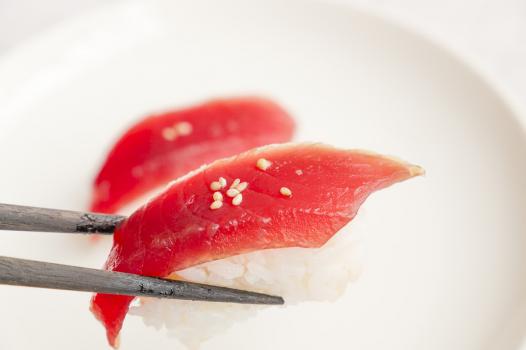
And here we see the B-vitamins: B1 (Thiamin), B2 (Riboflavin), B3 (Niacin), B5 (Pantothenic Acid), B6 (Pyridoxine)
| Nutrient | herring | tuna |
| Vitamin B1 | 12% | 6% |
| Vitamin B2 | 27% | 12% |
| Vitamin B3 | 34% | 191% |
| Vitamin B5 | 16% | 7% |
| Vitamin B6 | 35% | 55% |
| Vitamin B12 | 865% | 258% |
Now, lets look at mineral density. Here we have a lot of important electrolytes and minerals. Once again, units are in percent of RDI, thus for this 200 calorie serving anything above 10% would considered high.
| Nutrient | herring | tuna |
| Sodium | 8% | 39% |
| Potasium | 12% | 12% |
| Calcium | 14% | 4% |
| Magnesium | 12% | 13% |
| Phosphorus | 52% | 48% |
| Iron | 23% | 44% |
| Manganese | 2% | 1% |
| Selenium | 103% | 308% |
| Copper | 12% | 9% |
| Zinc | 13% | 14% |